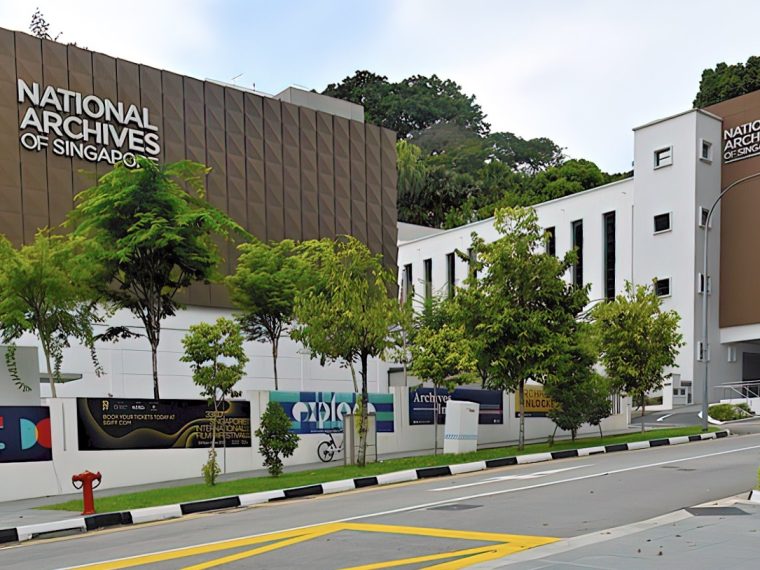
Tucked between the energy of the city and the calm of Fort Canning Hill, the National Archives of Singapore offers an intimate look at how a young island nation remembers, records, and retells its story. For travelers seeking more than sightseeing, it is one of those rare places where history feels alive and accessible.
To better understand the context of Singapore’s past and present, it helps to know how its districts evolved over time. You can get a sense of this from Singapore’s neighborhood guide, which maps out the cultural layers that shaped this nation’s identity.
Whether you are tracing family roots, exploring colonial-era maps, or simply escaping the afternoon heat, the National Archives invites quiet discovery. This is the place where letters, photos, and recordings come together to show how everyday life built the Singapore we see today.
In short: Visiting the National Archives of Singapore gives travelers and locals alike a firsthand connection to the country’s history through interactive exhibits, preserved documents, and personal stories. Everything is curated to show how Singapore’s collective memory continues to evolve.
What Makes the National Archives Special
The Archives is more than a storage facility. It serves as a living record of Singapore’s growth over time. You will find declassified government papers and oral history interviews. These capture the voices of people who helped shape Singapore’s journey.
Each floor of the Archives is purpose-built for a different type of visitor. The Research Room serves academics and students. The Audio-Visual Archives preserve radio, film, and TV material. The Gallery gives travelers a digestible, visually rich introduction to Singapore’s milestones.
Getting There and Getting Around
The National Archives sits conveniently near City Hall and Bras Basah, part of Singapore’s Civic District. It is easily reachable by MRT or bus, making it an effortless addition to your itinerary. To plan your route smoothly, check Singapore’s public transport guide for a quick overview of train lines, fare cards, and transfers.
If you prefer to walk, the path from Fort Canning Park takes about five minutes. It offers a leafy escape from downtown traffic. Taxis and ride-shares are also easy to find. They are convenient if you plan to visit nearby museums such as the Peranakan Museum or the National Museum of Singapore.
For first-time visitors, mornings tend to be quiet and well lit, giving you space to move through the exhibits at your own pace.
What You Will See Inside
The Archives’ exhibits balance preservation with accessibility. While official documents are carefully stored in temperature-controlled rooms, digital displays make much of this history available to the public. Interactive screens allow you to browse old maps, read letters from Singapore’s early leaders, or listen to recorded memories from different generations.
Here is what visitors usually find most memorable:
- Oral history recordings from residents who witnessed Singapore’s rapid transformation.
- Photo archives showing city streets before redevelopment.
- Historic maps and plans tracing how the island’s landscape was shaped by trade and migration.
- Film reels and TV archives that reveal how national identity was portrayed through media.
For a more immersive experience, the reading area often hosts temporary exhibitions featuring curated themes such as urban planning, wartime resilience, or cultural festivals.
A Cultural Stop Worth Your Time
After you have spent an hour or two exploring the Archives, you might find yourself craving something uniquely local to complete the experience. Just a short MRT ride away, Singapore’s hawker centres offer an authentic slice of everyday life. Our guide to hawker centres will point you to where you can enjoy chicken rice, laksa, or teh tarik like a local.
For travelers building a broader itinerary, pairing the Archives with the National Museum or Asian Civilisations Museum creates a full day of cultural discovery. Each offers a distinct perspective on how Singapore balances heritage with progress.
If you are traveling with family, consider following up your visit with a stop at Fort Canning Park. The shaded paths and open lawns there provide a quiet counterpoint to the structured displays inside the Archives. It is ideal for reflection or simply resting under the trees.
Tips for Planning Your Visit
A little preparation helps make your visit smoother and more rewarding. For background on conservation efforts and access policies, see Heritage Board Programs.
- Check the schedule: The Archives occasionally close sections for preservation work or exhibition changeovers.
- Bring ID: You will need it to access certain research materials.
- Respect the quiet zones: This is a working archive, and researchers are often studying delicate materials.
- Take notes: Photography is restricted in some areas, so jotting things down helps capture details for later.
- Combine visits: Many cultural attractions are within walking distance, so plan your route in advance.
If you are combining cultural sightseeing with Sentosa’s leisure attractions, Singapore’s compact transport system makes it easy to balance both sides of your trip.
Why It Matters
Singapore’s story is not just told in monuments or museums but in the words, images, and sounds stored here. The National Archives stands as proof that preserving memory is an active process, one that involves citizens, historians, and travelers alike.
For global visitors, this space provides something rare. It offers the chance to see how a multicultural city-state documents its transformation with precision and pride. Whether you are drawn by architecture, governance, or personal heritage, you will leave with a richer sense of how the past continues to shape daily life.