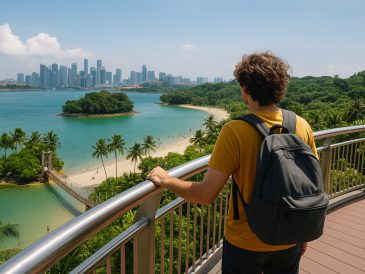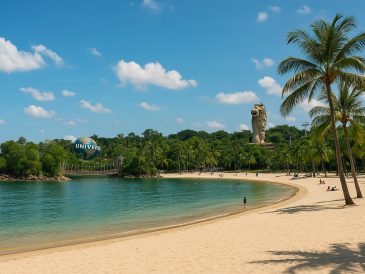
Singapore has a well-earned reputation as one of the easiest cities in the world to explore, and its public transport system is the main reason why. This guide breaks down every transport option, from the world-class MRT trains to the comprehensive bus network, so you can travel with the confidence of a local. The system is a marvel of efficiency, cleanliness, safety, and affordability. Mastering it is the key to unlocking all that Singapore has to offer.
Understanding how to get around is the first step in planning your trip, and it will make it much easier to figure out how to combine Sentosa with a Singapore itinerary. Once you are comfortable with the basics, you can effortlessly move between city attractions and the island getaway of Sentosa.
The First Step: How to Pay for Your Rides
Singapore uses a brilliantly simple, unified payment system for both its trains (MRT) and public buses. This means you only need one card or payment method to access the entire network, making your journey seamless.
The Easiest Option: Your Contactless Card or Phone (SimplyGo)
For most tourists, this is the most convenient way to travel. The SimplyGo system allows you to use your foreign-issued contactless bank card (Visa or Mastercard) or your mobile wallet (like Apple Pay or Google Pay) to pay for fares. You simply tap your card or phone directly on the payment reader at the train gantry or upon boarding the bus.
The biggest advantage is the sheer convenience. There is no need to buy a separate card or worry about topping up funds. Your fares are calculated automatically at the end of the day and charged directly to your bank account. The only thing to note is that a small administrative fee may apply to foreign-issued cards, but the ease of use is often worth it.
The Classic Choice: EZ-Link & Nets FlashPay Cards
Before SimplyGo, these stored-value cards were the standard way to travel. An EZ-Link or Nets FlashPay card is a dedicated transport card that you pre-load with money. You can purchase one at any MRT station’s ticket office or at convenience stores like 7-Eleven.
To use it, you tap the card on the reader when you start your journey and tap it again when you finish. The system automatically deducts the correct fare. You can easily top up the card’s value at the self-service machines found in every MRT station. This option is great for travelers on a longer stay or for those who prefer to keep their transport expenses separate from their main bank account.
For Heavy Users: The Singapore Tourist Pass
If you are on a short trip and plan to do a lot of sightseeing, the Singapore Tourist Pass can offer excellent value. This pass gives you unlimited travel on all basic bus services and trains for a set period. You can choose a 1, 2, or 3-day pass.
You can purchase the Singapore Tourist Pass at specific TransitLink Ticket Offices located at major MRT stations, including the one at Changi Airport, making it easy to get started right after you land. It is the best option for action-packed itineraries where you will be hopping on and off public transport frequently throughout the day.
The MRT: Singapore’s World-Class Train System
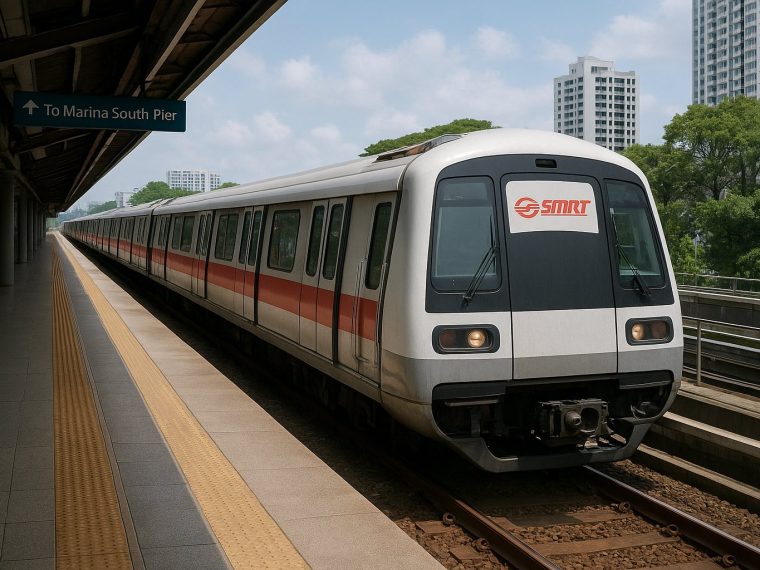
The MRT (Mass Rapid Transit) is the fast, clean, and fully air-conditioned backbone of Singapore’s public transport network. It is the most efficient way to travel longer distances across the city, connecting you to nearly every major landmark and neighborhood.
Understanding the MRT Lines
The MRT map might look complex at first, but it is very user-friendly. The system is organized into a series of color-coded and named lines that crisscross the island. For tourists, a few key lines will cover most of your needs:
- East-West Line (Green): This is your main connection from Changi Airport to the city center. It is a crucial part of the journey detailed in our train from Changi Airport to Sentosa Island guide.
- North-South Line (Red): This line runs directly through the famous Orchard Road shopping belt.
- Downtown Line (Blue) & Circle Line (Orange): These lines are excellent for reaching the Marina Bay area, including Marina Bay Sands and Gardens by the Bay.
- North-East Line (Purple): This is the most important line for your Sentosa adventure, as it takes you directly to HarbourFront Station, the main gateway to the island.
Navigating Like a Pro: Simple Tips
Getting around on the MRT is incredibly simple. To plan your route, just look for your destination station on the map and identify the corresponding line color. When you enter the station, all signs are clear and in English.
To find the correct platform, look for the signs that show the final destination of that line. For example, if you are heading west on the green line, the platform sign will say “to Tuas Link.” The trains have clear display screens and make announcements in English for every upcoming stop, so you will always know where you are.
Exploring by Bus: A More Scenic Route
While the MRT is fast and efficient, the public bus system is the best way to see the city at street level. Buses offer a more comprehensive network that can take you to smaller neighborhoods and specific locations that the MRT might not reach directly. It is a great option for short trips between nearby attractions and allows you to watch the vibrant city life pass by your window.
Why and When to Take the Bus
The main benefits of taking the bus are its extensive reach and the scenic view it provides. It is perfect for short hops where taking the MRT would involve a long walk to and from the station.
How to Ride the Bus: A Step-by-Step Guide
Riding a bus in Singapore is easy once you know the process.
First, you need to plan your route. Apps like Google Maps or Citymapper are essential tools. They will tell you exactly which bus number to take and where to find your bus stop. When you see your bus approaching, you must wave or signal for it to stop, as they do not stop automatically.
Board at the front door and tap your payment card on the reader. Keep an eye on the onboard display screen or your app to know when your stop is coming up. Before your stop, press one of the red “stop” buttons located on the handrails. Finally, and this is very important, exit through the rear door and tap your card on the reader again. Tapping off ensures you are charged the correct fare for the distance you traveled.
Taxis and Ride-Sharing: For Directness and Convenience
Sometimes, you just need a direct, door-to-door service. Taxis and ride-sharing apps are readily available for when you are short on time, carrying luggage, or traveling late at night.
Traditional Taxis
You can hail a taxi on the street when its rooftop sign is green, or you can wait at one of the designated taxi stands found at malls, hotels, and attractions. All taxis use a meter, and you can pay with cash or a credit card. Be aware that various surcharges can apply depending on the time of day (peak hours), location (CBD), and if you are traveling late at night.
Ride-Sharing with Grab
The dominant ride-sharing app in Singapore is Grab, which functions much like Uber. For tourists, using Grab is highly recommended. The app gives you an upfront, fixed price before you book, so there are no surprises. Payment is handled cashless through the app, and you can choose from a variety of service levels, from budget options to premium six-seater cars. Perhaps the biggest benefit is that you enter your destination directly into the app, eliminating any potential language barriers with the driver.
Key Tips for a Smooth Journey
A little local knowledge can make your travel experience even smoother.
Essential Apps to Download
Before you start exploring, make sure you have Google Maps, Citymapper, and Grab downloaded on your phone. These three apps will cover all your planning and booking needs.
Understanding Public Transport Etiquette
Singaporeans take pride in their public transport system, and there are a few important rules of etiquette to follow. Eating and drinking are strictly forbidden on all trains and buses, and there are heavy fines. Always give up the priority seats to the elderly, pregnant women, or others who need them more. On escalators, stand on the left to allow people in a hurry to pass on the right. Finally, it is considered polite to keep your voice down and avoid loud phone conversations.
Explore Singapore with Confidence
Singapore’s public transport system is one of the best in the world. It is safe, intuitive, and designed to get you where you need to go with minimal fuss. With this guide, you now have all the knowledge needed to use it effectively.
Now that you know how to get around the city, you can easily make your way to HarbourFront, the starting point for your adventure on Sentosa. Learn everything you need to know about getting around the Sentosa island buses trams and walking routes.