Before any international trip, two fundamental questions always come to mind: “How will I pay for things?” and “How will I stay connected?” Getting these travel essentials sorted out is the first step to a stress-free holiday. This is your complete guide to handling money in Singapore, from understanding the local currency to using cards, and it also explains the best options for mobile data, including the popular eSIM for Singapore.
You can rest assured that Singapore is a very modern and traveler-friendly country, making both payments and connectivity straightforward. Getting these essentials sorted out early is a key part of planning. For more high-level tips, see our guide on how to combine Sentosa with a Singapore itinerary to help you structure your entire trip.
Navigating Money and Payments in Singapore
Singapore’s financial system is efficient and easy for tourists to use. You will find that a mix of card and cash payments will cover all your needs, from luxury shopping to enjoying a meal at a local food court.
An Introduction to the Singapore Dollar (SGD)
The official Singapore currency is the Singapore Dollar, which is commonly abbreviated as SGD or represented by the symbol S$. Getting familiar with the notes and coins will help you feel more comfortable when making purchases.
The most common banknotes you will handle are the colorful polymer notes: the purple $2, the green $5, the red $10, and the blue $50. While a $100 note exists, it is less common in daily transactions. The coin system is also simple, with 5, 10, 20, and 50 cent coins, along with a distinctive gold-colored $1 coin.
Cash vs. Card: What to Use and When
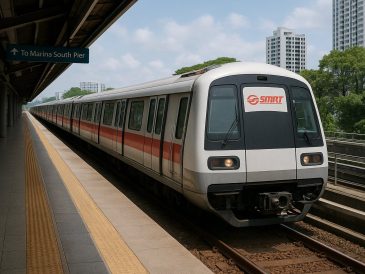
For the most part, credit and debit cards are king in Singapore. Major cards like Visa, Mastercard, and American Express are widely accepted in almost all hotels, restaurants, cafes, and retail shops. You can even use your contactless card to pay for public transport through the SimplyGo system. This should be your primary payment method for most of your trip.
However, you will definitely still need some cash. It is absolutely essential for certain authentic local experiences. The heart of Singapore’s incredible food scene, the hawker centres, operate almost entirely on cash. Additionally, many smaller, family-run eateries and shops in charming neighborhoods like Chinatown or Little India will prefer cash payments. While most taxis now accept cards, having cash on hand is always a reliable backup.
How to Get Singapore Dollars: ATMs vs. Money Changers
Withdrawing cash from an ATM is the most convenient way to get the local currency. ATMs are widespread, safe, and available 24/7. Before you leave home, it is a good idea to inform your bank of your travel dates to prevent your card from being blocked. You should also check with them about any fees for foreign withdrawals so you can plan accordingly.
For changing foreign cash, a key insider tip is to use a licensed money changer. They almost always offer significantly better exchange rates than the banks or the changers you will find at Changi Airport. For some of the most competitive rates in the city, head to well-known and reputable spots like The Arcade at Raffles Place or the numerous money changers located within the Mustafa Centre in Little India.
Staying Connected: A Guide to SIM Cards and eSIMs
Having reliable mobile data on your phone is no longer a luxury; it is a travel essential. It helps you navigate with Google Maps, book rides on apps like Grab, and share your experiences with family and friends back home.
Why a Tourist SIM is a Smart Idea
Using your home SIM card for international roaming can result in surprisingly high bills. A local tourist SIM card is a smart, cost-effective solution. It provides you with a generous amount of high-speed data for a fixed price, giving you peace of mind and keeping you connected throughout your trip.
The Modern Choice: Getting an eSIM for Singapore
The easiest way to get connected is by using an eSIM for Singapore. An eSIM is simply a digital SIM card that you can download and install on your compatible smartphone without needing to swap out a physical card. This modern option offers several key advantages for a tourist.
The ultimate benefit is convenience. You can purchase and set up your eSIM for Singapore online from a global provider like Airalo or Holafly before you even leave for your trip. This means your data plan is ready to use the moment you land. Additionally, since your physical home SIM card stays in your phone, you can still receive important calls and texts on your regular number.
The Traditional Option: Physical Tourist SIM Cards
The traditional physical SIM card is still a very popular, affordable, and effective choice for many travelers. The most convenient place to buy one is at one of the official telco counters (Singtel, StarHub, or M1) located at Changi Airport, right after you clear immigration. Staff there can help you choose the best plan and activate it for you.
These tourist SIM cards are also widely available at convenience stores like 7-Eleven and Cheers all around the island. The three major providers—Singtel, StarHub, and M1—all offer competitive tourist packages with different data allowances and validity periods, so you can choose one that fits the length of your stay.
It is critical to remember that you must present your passport for registration when you buy a physical SIM card. This is a legal requirement in Singapore, so be sure to have it with you.
Travel with Confidence
You are now prepared to handle the travel essentials for your Singapore trip. The city is modern and card-friendly, but having some Singapore Dollars on hand for authentic local experiences is always a good idea. For staying connected, the options are excellent, from a traditional SIM card picked up at the airport to a convenient eSIM bought in advance.
Now that your money and data are sorted, you are ready to get out and explore. See how easy it is to pay for your rides in our Guide to Singapore’s Public Transport.